Why do we get thirsty at night? Dry mouth and wanting water
The bedside glass can answer thirst without explaining every dry-mouth sensation. Notice the difference and the pattern.
Why do we get thirsty at night, just when the house has finally gone quiet? You wake, reach past the book on the bedside table, and find yesterday's glass by touch. Sometimes you want a drink. Sometimes the main problem is a sticky, dry feeling in your mouth. Those experiences can overlap, but they are worth describing separately. The darkness makes everything feel mysterious; a few clear observations can make the morning conversation simpler.
Am I thirsty, or does my mouth feel dry?
The NHS guide to excessive thirst distinguishes wanting water from a mouth that feels dry. You might use the same word for both when you are half asleep. In the morning, try to be more exact: did you feel a strong wish to drink, or did you notice the feel of your tongue and lips first? Neither answer is a diagnosis. It is simply a better starting point than calling every uncomfortable night thirst.
There is no clever home challenge to win here. Do not deny yourself water to find out how long the feeling lasts. Equally, do not set yourself an arbitrary drinking target because a stranger online described theirs. Keep a glass nearby and drink when thirsty. If the pattern keeps returning, bring it to your GP rather than trying to force a conclusion from one broken night's sleep.
Could sleeping with my mouth open be part of the picture?
It can. Breathing through the mouth at night is among the possible causes listed in the NHS information on dry mouth. That makes the way you wake a useful detail to mention, especially if you also notice a blocked nose. It does not mean you can identify the whole explanation from the pillow. Nor is it an invitation to copy a bedtime trick involving tape or other improvised equipment.
Think about what you actually know. Perhaps your partner has noticed that you sleep with your mouth open. Perhaps you have simply guessed because the feeling is strongest on waking. Keep observation and guess in separate sentences. “I wake with a dry mouth” is useful even when you cannot add anything more. You are allowed to bring a question to an appointment before you have assembled an answer.
What should I notice about the evening before?
Remember the ordinary details without putting your dinner on trial. There was the late bowl of salty popcorn, the coffee you made while finishing work, the glass you meant to refill. These are details to record, not a verdict about the cause. A night after a noisy dinner and a night after a quiet evening may feel different. Notice that difference before inventing a strict new set of household rules.
A short note is enough: when you woke, what you felt, and whether it happened again. Include anything else you want to discuss, including medicines you take. You do not need to wake fully and type a report beside a sleeping person. Leave a word on paper if that suits you, then write the fuller version after breakfast. The point is to remember a pattern, not to turn sleep into unpaid administrative work.
When does repeated night-time thirst need a conversation?
Ask your GP about excessive thirst that continues despite drinking over several days, particularly if you also need to pee frequently. Mention repeated dry-mouth episodes too, especially when they interrupt eating, speaking or sleep. Bring the facts you have rather than a list of illnesses found at dawn. If a prescribed medicine seems relevant, ask about it; never change a dose or stop it on your own.
Booking the conversation is a practical decision, not an admission that you should have solved the problem earlier. Bedside habits are easy to minimise because they happen in private. You can put the experience into ordinary language: the glass beside the lamp, how often you reach for it, whether you wake again. The article on medicines and dry mouth offers another starting point if you have a prescription question.
Where do mints fit when the day starts?
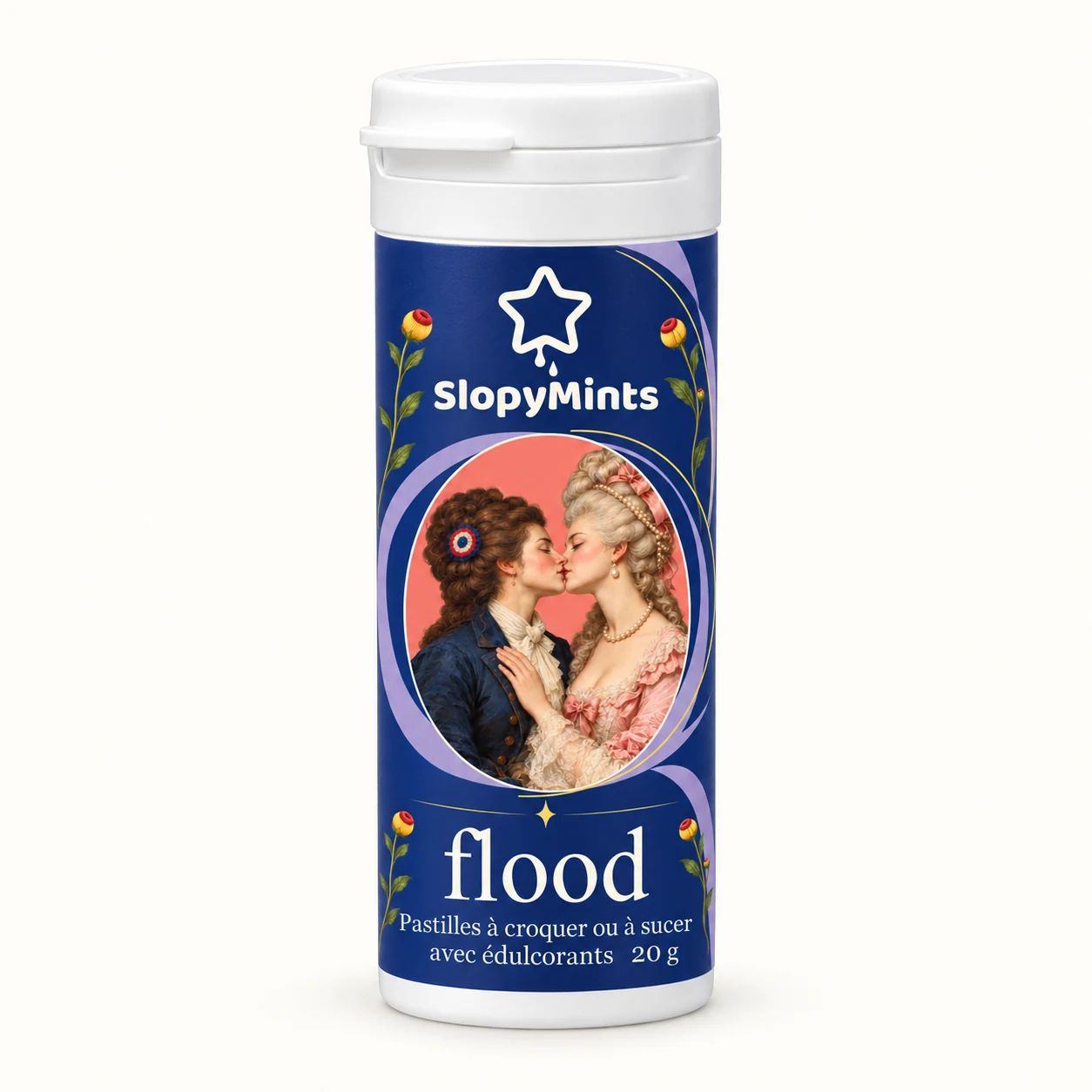
In the daytime, a chosen flavour can be a small pleasure rather than an explanation for the night. SlopyMints offers sugar-free mints made in France: SlopyMints FLOOD stimulates saliva and makes your mouth water, while SlopyMints SLICK is for texture and glide. Crunch them between the teeth, following the label. Use a mint only when fully awake and sitting up. Never drift off with one in your mouth.
At bedtime, keep the arrangement simpler: water within reach, a place to put the glass safely, and enough light to find it. In the morning, open the curtains before opening another search result. Notice how you feel now, write the question that remains, and take it to the right person if the pattern continues. A quiet night is desirable. So is an honest account of the nights that are less quiet.
Questions from the bedside
Does a dry mouth always mean I need more water?
No. Dry mouth and thirst can feel similar, but the feeling alone does not explain the cause. Drink when thirsty and ask your GP about repeated or persistent symptoms.
Can sleeping with my mouth open matter?
Yes. The NHS lists breathing through the mouth at night as a possible reason for a dry mouth.
When should I speak to a GP about thirst?
Speak to your GP if you stay excessively thirsty despite drinking over several days, especially if you also need to pee frequently.
Should I keep mints beside the bed?
Keep water within reach. Only use a mint while fully awake and sitting up, according to its label; never fall asleep with one in your mouth.
From reading to discovering.
Two formulas, three flavours each. FLOOD gets saliva flowing; SLICK gives it a smoother texture. Try one tube or build your own mix.