White tongue: common causes and when to see someone
A pale coating in the bathroom mirror can start a long morning of searching. Separate what you see from what you feel, and know which changes deserve an appointment.
A white tongue can turn a sleepy glance in the bathroom mirror into a very alert search for common causes. The kettle clicks off. Your toast cools. You look again, under a different light, hoping the answer will become obvious. Sometimes you are noticing a general coating; sometimes there is a distinct white patch. Those descriptions matter more than matching your reflection to the most alarming photograph on your phone. Start with what is actually there, then decide whom to ask.
Your tongue's appearance is one observation. A sticky feeling, an unfamiliar taste or discomfort when eating is another. They can arrive together without giving you a ready explanation. You do not need to solve that puzzle before making an appointment. Plain language works: where the change is, when you first saw it, and whether anything hurts. That is a much better starting point than a diagnosis borrowed from a picture.
What commonly makes a tongue look white?
A surface coating can include everyday debris and shed cells caught between the small bumps on the tongue. Mouth breathing, smoking and alcohol are among the factors discussed in the Mayo Clinic overview of white tongue. But a white appearance is not one single condition. Different kinds of patches can have different explanations, and you cannot reliably sort them by colour alone. Notice whether the change is spread across the surface or clearly localised. Avoid scraping harder to make the distinction. You are observing your mouth, not trying to pass a cleaning test.
A recent change in routine gives context, too. Perhaps you have been travelling, sleeping with a blocked nose or taking a new medicine. Write those things down without turning the first coincidence into the answer. A white tongue does not, by itself, tell you which factor matters. If you have a recurring patch, let a dentist or doctor look at it rather than cycling through increasingly elaborate home experiments.
White patches can also occur with conditions such as oral thrush, lichen planus or leukoplakia. These names are reasons to get a change assessed, rather than labels to choose for yourself. They are not interchangeable with an ordinary coating. Tell the person examining your mouth about recent medicines and discomfort; leave the interpretation to that conversation.
Is white tongue the same as a dry mouth?
No. One describes an appearance; the other describes an experience that may include stickiness or a need to sip while speaking. You can mention both at a visit. Try comparing the first part of the morning with the afternoon: does the sensation change after breakfast, while the visible area stays? You do not need a detailed chart. A short note is enough to keep those observations separate.
If dryness is the part that keeps returning, read about a mouth that feels dry all the time. Give the timing its own attention. A glass of water beside you during a call is an ordinary practical choice, but it does not explain a visible patch. Let each question keep its proper size instead of forcing everything into one answer.
Should I brush or scrape my tongue?
Keep your usual routine gentle. A soft brush is a better starting point than enthusiastic scrubbing. Stop if you cause pain, and do not keep working at an area because it refuses to look like the rest. There is no prize for producing a perfectly uniform surface. Your bathroom light, a camera flash and the angle of your tongue can also change how dramatic a photograph seems.
Do not borrow a sharp implement or build a homemade mixture to test what comes away. Something that stings is not proving its usefulness. If a food or drink is uncomfortable, choose something else and mention that sensitivity at your appointment. The aim is to get through an ordinary breakfast, not to stage a sequence of challenges for a sore mouth.
When should a white patch be checked?
The NHS advises seeing a dentist or doctor for white patches on the tongue. Persistent or worsening pain is another reason to make contact. You need not wait until you can name the cause. Tell the receptionist what has changed and whether eating or speaking has become difficult. An appointment is where uncertainty can be discussed; it is not something you earn by investigating first.
If swelling comes on suddenly and you have trouble breathing or swallowing, seek urgent assistance. That is different from planning a routine appointment for a longstanding visible change. For the visit, bring a list of medicines and any recently added products. Do not stop a prescribed medicine to see what happens. The person who prescribed it, or a pharmacist, can discuss that question with the necessary context.
How do I stop checking it all morning?
Choose a useful next action: make the call, write the note, get on with breakfast. Repeatedly comparing photographs rarely makes the next decision clearer. If you are worried, say so when you speak to a professional. You can ask what to watch for, when to return and whether a change needs another look. Those are specific questions that remain useful after you leave the room.
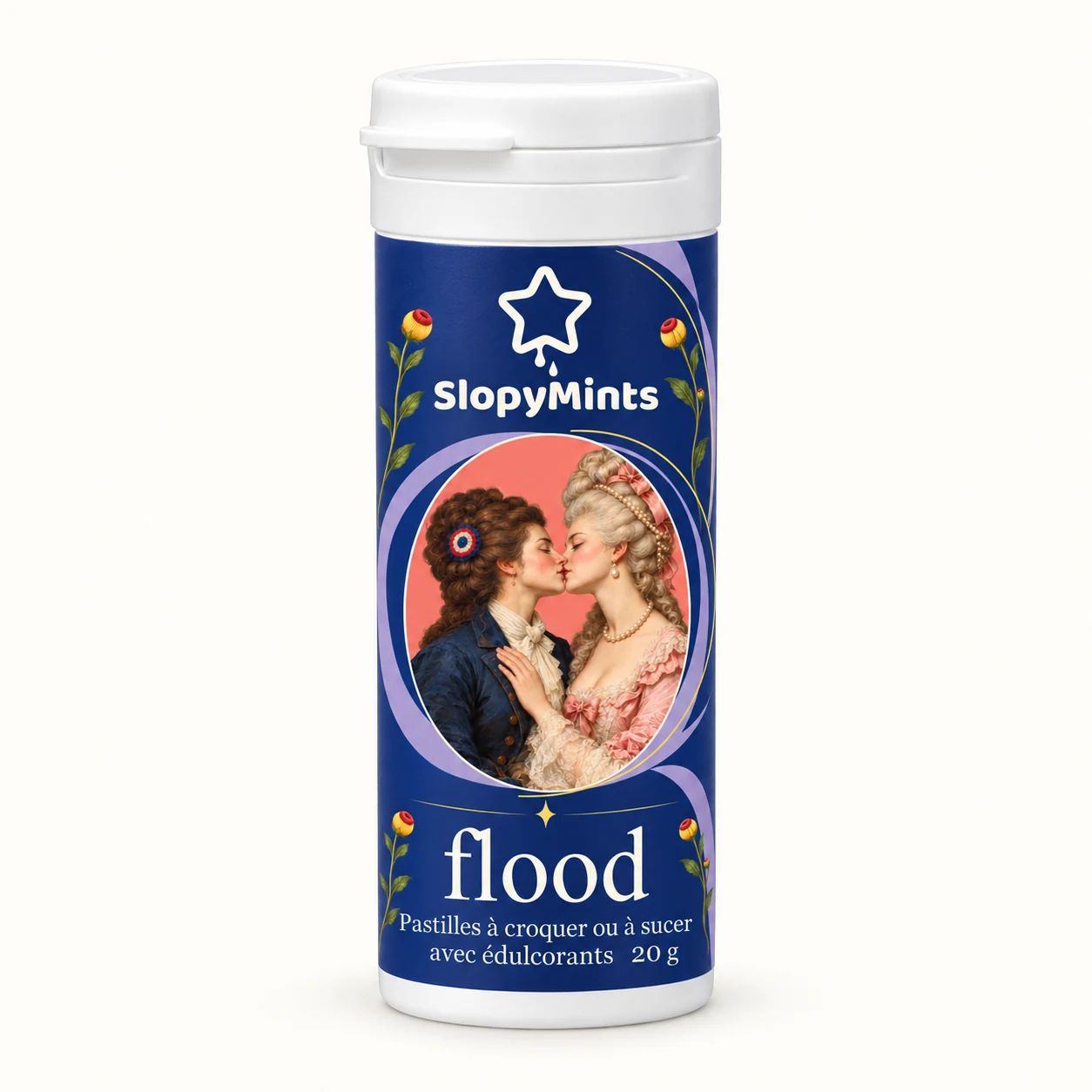
A mint belongs in a different conversation, about taste. SlopyMints FLOOD stimulates saliva; the sugar-free mints are made in France and meant to be crunched between the teeth. They do not explain a white patch. If your mouth is sore, ask before introducing another product. For an ordinary flavour choice on another day, the pack page lets you browse. Today, the most useful object on the table may simply be the note you are taking to your appointment.
Questions about a white tongue
Does a white tongue tell me the cause?
No. A general coating and a distinct patch can need different questions. A dentist or doctor can assess a visible change in context.
Should I scrape a patch until it disappears?
No. Keep cleaning gentle and avoid repeatedly rubbing an area that stays visible or hurts.
Can I mention dryness at the same appointment?
Yes. Describe the dry feeling separately from what you see, including its timing and any difficulty eating or speaking.
What should I bring to the visit?
A short account of when the change began and a list of medicines and new products. Mention pain and any change in eating or swallowing.
From reading to discovering.
Two formulas, three flavours each. FLOOD gets saliva flowing; SLICK gives it a smoother texture. Try one tube or build your own mix.