Mounjaro dry mouth: what to notice and ask your prescriber
A dry mouth deserves a clear description and a conversation with your prescriber, rather than a dose change made alone.
Searching for “Mounjaro dry mouth” often starts with an ordinary interruption: you pause halfway through a sentence and reach for your glass. Perhaps it happens at your desk, perhaps during dinner, perhaps when you wake. The useful next step is to describe that interruption clearly to your prescriber. A search result cannot tell you what caused it, and a new sensation is no reason to change your dose yourself.
Does the Mounjaro leaflet mention dry mouth?
Precision matters here. The EMA product information, including the patient leaflet, does not name dry mouth as a separate side effect. That is different from saying that a person taking the medicine cannot notice a dry mouth. It means the leaflet should not be made to say something it does not say. Keep the document that came with your own pack; your pharmacist can help you read it.
Online conversations often put several medicines under the same GLP-1 heading. That shorthand is convenient for a discussion and too broad for checking a particular leaflet. Bring the actual name on your box into the conversation. Bring the box itself if that is easier. Your question belongs to the prescription you have, rather than to a collection of posts that happen to use the same abbreviation.
What should you notice before calling your prescriber?
Start with the scene. Was it breakfast, after a long meeting, or the first words you spoke on waking? Did the feeling arrive before your morning coffee or afterwards? You do not need a colour-coded spreadsheet. A short note in your phone, written when the sensation happens, is usually easier to explain than a week reconstructed under the bright light of an appointment room.
Separate the things you can describe from the explanation you suspect. “My mouth feels sticky when I talk” gives someone something concrete to ask about. “The medicine has stopped my saliva” already contains a conclusion. You can be certain that something feels different without being certain why. That distinction leaves room for a proper conversation and keeps a search history from becoming your diagnosis.
Include what the dryness interrupts. Perhaps you keep stopping to sip during a call. Perhaps a piece of toast is less pleasant than usual. Perhaps you wake and cannot decide whether you want water or simply dislike the feeling in your mouth. Describe the inconvenience in your own words. Plain language is sufficient; you do not have to borrow a technical term to deserve a careful answer.
What questions are worth taking to the appointment?
Ask whether the symptom could be connected with your prescription, what else the prescriber wants to know, and when you should contact them again. Take a list of other medicines and supplements rather than trying to remember it at the door. Mention anything you recently started or stopped. Leave decisions about your prescription with the person responsible for it, and never adjust the dose on your own.
If writing a message feels awkward, keep it brief: “Since starting this medicine, I have noticed a dry mouth at these times. It is affecting this part of my day. Could we discuss it?” This is a suggested way to ask a question, not somebody else's account of an outcome. You can send an accurate message without apologising for the question or declaring an emergency you do not mean.
How can an ordinary day stay ordinary?
Keep water where you can reach it and drink when you are thirsty. At lunch, give yourself enough time to eat without a meeting starting over the last bite. If talking becomes uncomfortable, pause. These small courtesies are easier to arrange than a complicated shopping list. They also let you notice what is happening without making every glass and mouthful into a test you must pass.
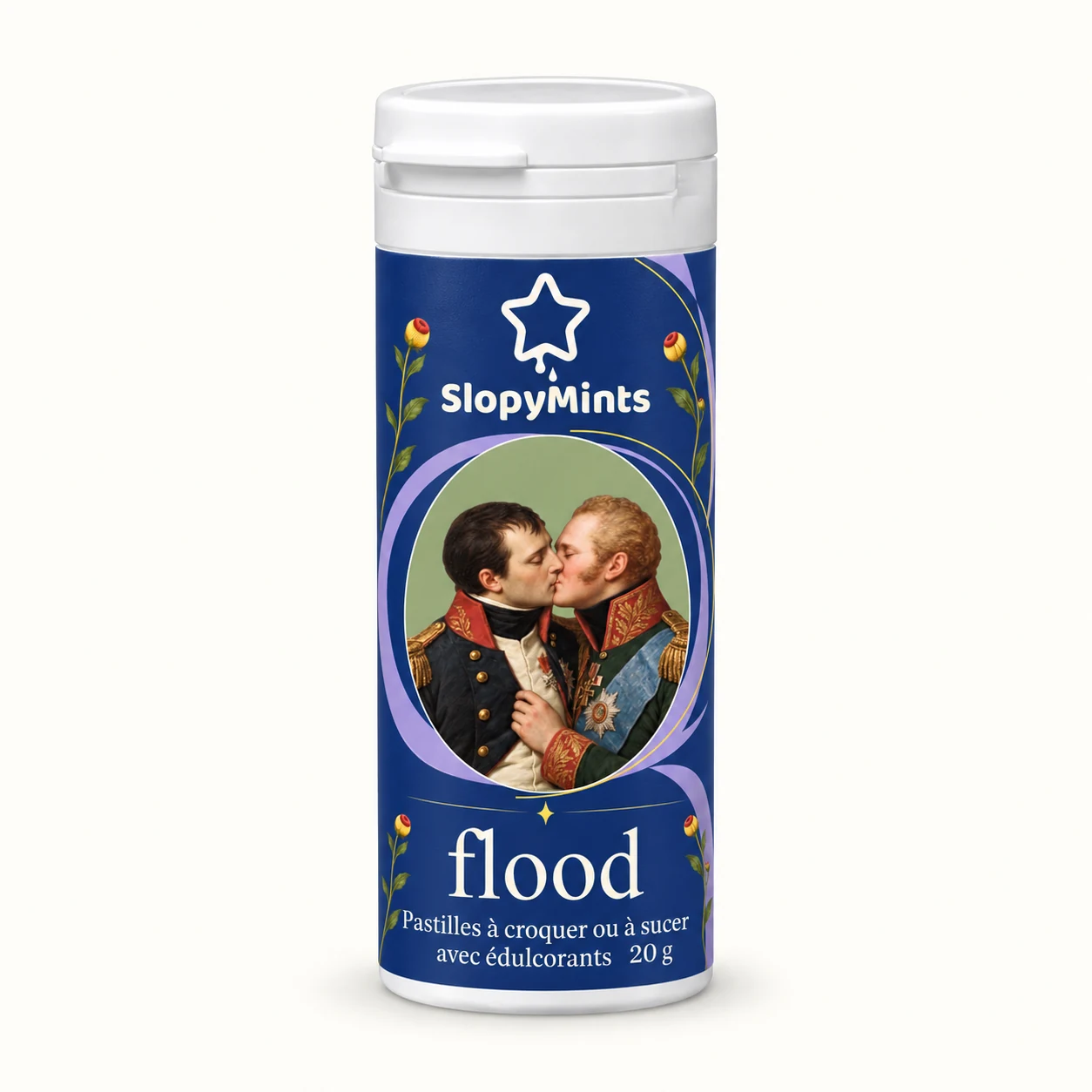
A flavour can remain a flavour. SlopyMints is made in France and its sugar-free mints are meant to be crunched between the teeth. SlopyMints FLOOD stimulates saliva and makes your mouth water; SlopyMints SLICK is for texture and glide. Neither sensation answers a question about a prescription. If you are considering a product while taking medicine, show its label to your pharmacist and ask about your own circumstances before choosing.
What if the searching becomes the evening?
Close the tabs once you have written down your questions. A succession of strangers describing similar words can feel like evidence about your body, even when their circumstances are entirely different. Give your prescriber the account that only you can give: what changed, when you noticed it, and what you want to understand. The broader article on medicines and dry mouth can help organise that conversation. Then let the evening return to dinner, a book, or the person waiting beside you.
Questions about Mounjaro and dry mouth
Is dry mouth listed in every Mounjaro patient leaflet?
No. The EMA patient information linked here does not name dry mouth as a separate side effect. Read the leaflet supplied with your own medicine and ask your prescriber about new symptoms.
Should I change my dose if my mouth feels dry?
Never change the dose yourself. Contact your prescriber and describe what you have noticed.
What should I write down before the appointment?
Note when the dryness started, when it happens, whether drinking changes the feeling, and how it affects eating, speaking or sleep. Bring your medicine list and leaflet.
Can a mint answer the question about my medicine?
No. FLOOD stimulates saliva when crunched, but that sensation cannot explain why your mouth is dry or decide whether your prescription needs changing.