Why does my mouth feel dry after drinking water at work?
The bottle is full, the meeting is long, and your mouth still feels dry. Start with the shape of your working day.
Why does my mouth feel dry after drinking water? At work, the question often arrives halfway through a sentence. Your bottle is beside the keyboard. You have been using it. Yet by the afternoon call, words feel sticky and you keep reaching for another sip. Rather than judging the size of your bottle, look at what happens around it: the talking, the coffee, the tense pause before you unmute. A working day has a texture of its own.
Why can I still have a dry mouth when I drink water?
Drinking water and having a comfortable mouth are related experiences, but a glass does not explain every cause of dryness. Medicines and breathing through the mouth can be part of the picture. MedlinePlus lists several possible reasons for dry mouth. That is useful context, not a way to identify your own cause from a screen. The question to carry forward is what you notice, and when.
Keep drinking water normally. There is no need to turn a disappointing sip into a verdict against water, or to force down more and more because your mouth has not met an imagined target. The older guide to water and mouthfeel approaches a broader sensory question. Here, the useful next step is much smaller: take a proper look at an ordinary day at your desk.
What should I notice during a long meeting?
Notice whether you have been speaking almost continuously. A presentation can eat the pause in which you would ordinarily take a drink. Put your glass where you can reach it without disappearing below the camera. Leave a natural break after a slide. If you are chairing the meeting, make room for other voices. Nobody needs a heroic uninterrupted monologue, least of all the person delivering it.
Also notice your arrival at the call. Were you rushing upstairs? Did you spend the previous hour rehearsing a difficult answer? You do not have to label every dry spell as nerves. Just write down the setting in plain language: “before the client call”, “after the train”, “mostly late afternoon”. These details are more useful than a dramatic explanation borrowed from a search result. One short note can preserve what you would otherwise forget.
Could my desk routine be worth changing?
Start with convenience. Move the water out from behind the monitor. Take your lunch away from the inbox. Give yourself permission to stop speaking for a moment instead of filling every silence. These are changes to the working day, not a promise about what your mouth will do. Try something you can repeat without adding another elaborate task to an already crowded calendar.
Coffee deserves a practical look, too. Perhaps you like the first cup and barely notice the later ones. Perhaps the taste hangs around long after the paper cup has gone. Choose your next drink deliberately rather than accepting another by habit. If dryness repeatedly follows a particular pattern, include that observation in your notes. You are collecting a description, not conducting a private experiment with strict rules and a score.
What if I notice it before work as well?
The desk may simply be where you pay attention. Think back to waking up, breakfast and the journey in. A blocked nose, sleeping with your mouth open or a change in your usual medicines are details worth mentioning to a professional. Read the medicine leaflet if relevant, and speak to your pharmacist or prescriber about questions. Keep taking prescribed medicines as directed while you seek their advice.
Do not spend the commute trying to decide which explanation must be yours. A few clear observations are enough to begin a conversation. If dryness persists, see a dentist or doctor. If speaking, eating or swallowing has become difficult, say so when arranging the appointment. The point is to give the person listening a clear account of your day, including what has changed and what has stayed much the same.
Where does a mint fit into the afternoon?
A mint can be an enjoyable break between tasks. SlopyMints are sugar-free and made in France. SlopyMints FLOOD stimulates saliva and makes your mouth water; SlopyMints SLICK is for texture and glide. Crunch the mint between the teeth, following the label directions. Choose that small taste moment because you enjoy it, while keeping persistent dryness on its own practical track.
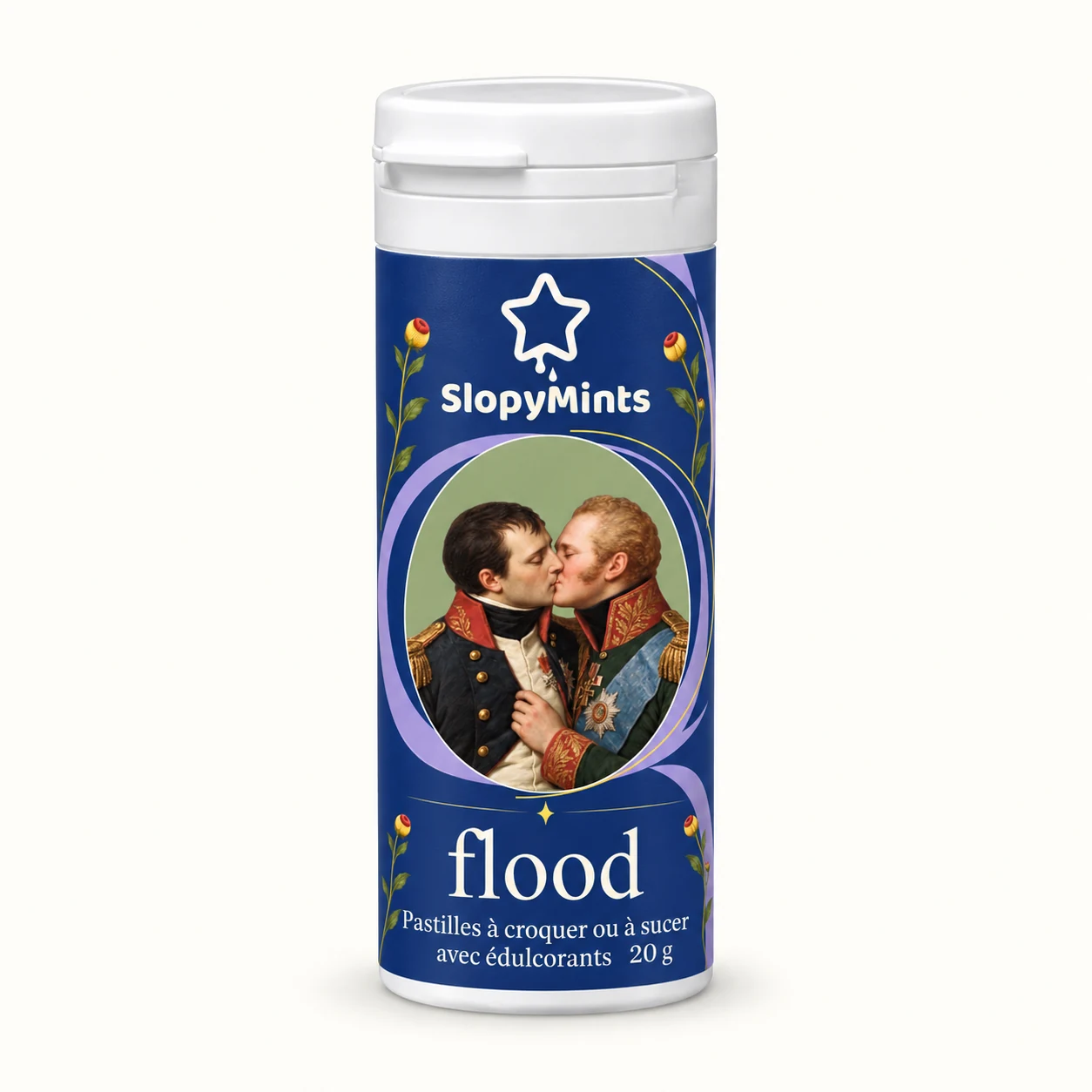
Before you return to the next call, close the tube, put the glass within reach and finish your pause. For an evening beyond the laptop, our freshness habits before a date keeps preparation equally ordinary. You can choose a pack when you know which formula interests you. There is no need to make buying something the conclusion of every uncomfortable afternoon.
Questions from the desk
Does a dry mouth after water mean I should drink much more?
The feeling alone cannot tell you that. Drink water normally, notice the pattern and ask a dentist or doctor about ongoing dryness.
What is useful to write down?
Note when it happens, what you were doing and any recent changes in medicines or routine. A short description is enough.
Should I stop a medicine if the leaflet mentions dry mouth?
Keep taking it as directed and speak to your pharmacist or prescriber before making changes.
What does FLOOD offer during a break?
FLOOD stimulates saliva and makes your mouth water, with a fresh taste. Crunch it between the teeth according to the label.